
Marion County & Central Florida
Horse Farm & Barn Painting in Ocala, FL
Painting, staining and sealing for working horse farms — barns, stall fronts, run-in sheds, tack rooms, arenas and outbuildings — carried out around live barn operations.
- We work around horses, not instead of them — no need to empty the barn
- Low-odour, low-VOC coatings so stalls can be reoccupied the same day
- Crew trained to work quietly: no compressors near cross-ties, no loose tarps
- Tools, buckets and tape picked up before turnout, every single day
- Barn, fence, shed and arena work handled by one crew on one schedule
Painting a barn is not painting a house
Marion County calls itself the Horse Capital of the World, and most of the painters working here treat a barn as if it were a very large garage. It is not. A barn is a working building with a schedule — feed at six, turnout at seven, farrier on Tuesday, a vet who needs the aisle clear — and a population that does not care about a drop cloth until it flaps.
Everything about the way we sequence a farm job comes out of that. We stage from the end of the aisle rather than the middle. We cut in stall fronts on the side that is empty and move as horses move. We use coatings that have flashed off before the horses come back in, and we pick up every tool, bucket, rag and strip of tape before turnout, because a loose tarp in a Florida afternoon wind is how a good day turns into a vet bill.
What we paint on a working farm
Most farm jobs start with one building and grow, because once the barn looks right the fence line and the sheds stop looking right. We would rather quote the whole property and phase it than keep coming back.
- Barn exteriors — metal, board-and-batten, T1-11, hardie and painted block
- Barn interiors — aisles, ceilings, wash racks, grooming bays and feed rooms
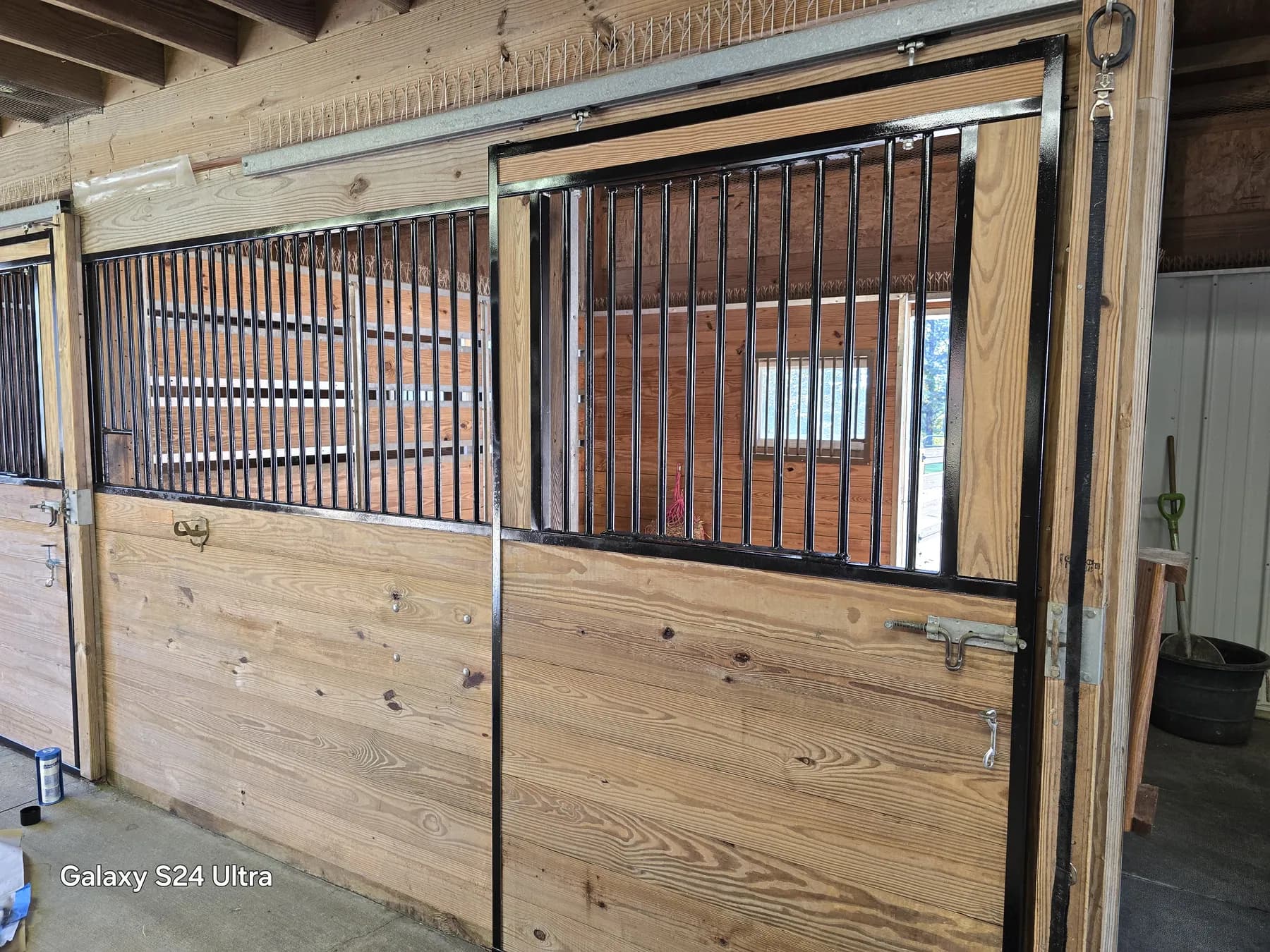
- Stall fronts, stall doors, kick boards and tongue-and-groove stall liners
- Tack rooms and barn offices, including trim, built-ins and climate-controlled rooms
- Run-in sheds, loafing sheds, hay barns and equipment buildings
- Covered arenas, viewing rooms, judges' stands and announcer boxes
- Mounting blocks, jump standards, gates and farm signage
- Timber-frame pavilions and open-sided structures — stain, seal and whitewash
Coatings that survive Florida, around animals
Two things destroy coatings on a Marion County farm: ultraviolet load and moisture. Unshaded metal roofing and south-facing board-and-batten take a brutal amount of sun, and the humidity means a film that cannot breathe will blister off within a couple of seasons. On top of that, anything a horse can reach is something a horse will eventually chew, lick or lean on.
So we specify for the surface, not for the invoice. Raw timber and cypress generally take a penetrating oil or a semi-transparent stain rather than a film-forming paint, because a stain fails by fading instead of by peeling, which makes the next maintenance cycle a wash-and-recoat instead of a full strip. Metal gets a direct-to-metal acrylic over a rust-converting primer on any spot that has already started. Interior stall surfaces get a low-VOC, zero-added-formaldehyde acrylic that is inert once cured.
We will tell you on the estimate which surfaces are candidates for a cheaper refresh and which ones genuinely need stripping first. Recoating over a failing film on a sun-facing wall is money you spend twice.
Working around horses, handlers and the barn routine
Before the first day we walk the property with whoever actually runs it — the barn manager, the trainer, sometimes the groom who knows which gelding spooks at ladders. We agree on which stalls are empty when, where the truck parks so it is not in the turnout lane, and what the signal is to stop if something goes sideways.
In practice that means no spraying in an occupied aisle, no running a compressor near cross-ties, extension cords routed along the wall and taped down instead of across a walkway, and all masking removed at the end of the day rather than left up overnight. If a horse needs to come in early because of weather, we move. The schedule bends to the barn.
How the job runs
On-farm walkthrough
We come to the property, look at every structure you want quoted, and talk through the barn routine so the schedule works around turnout and feed.
Written scope and coating spec
You get a line-by-line quote that names the surface, the prep, the product and the number of coats — not a lump sum.
Prep and protection
Pressure or soft wash, scrape and sand failing film, spot-prime bare wood and rusted metal, mask hardware, latches and grillwork.
Application
Brush, roll or spray depending on the surface and on whether the area is occupied. Occupied aisles are brushed and rolled, never sprayed.
Daily reset
Every tool, bucket, cord and strip of tape comes down before turnout. The barn is usable overnight, every night.
Walkthrough and touch-up
We walk it with you, fix the punch list the same visit, and leave labelled touch-up paint for each surface.
What it typically costs
Real ranges for Marion County and the surrounding counties, so you can sanity-check any quote you are given — ours included. Every job still gets a written, line-item estimate.
| Scope | Typical range | What moves the number |
|---|---|---|
| Stall fronts and doors (per stall) | $120 – $300 | Varies with whether we are recoating a sound finish or stripping a failed one, and whether grillwork has to be masked or removed. |
| Barn exterior, small (4–8 stall) | $3,500 – $8,000 | Driven by substrate and access more than by square footage. Metal with existing rust costs more than sound board-and-batten. |
| Run-in / loafing shed | $450 – $1,200 | Per shed, exterior only. Interiors add roughly 40%. |
| Tack room or barn office | $600 – $2,000 | Includes trim, built-ins and ceiling. Climate-controlled rooms take a finer finish. |
Ranges are guidance for planning, not a quote. Condition of the existing surface moves the number more than size does.
Horse Farm & Barn Painting: common questions
Do the horses have to leave the barn while you paint?
No. On almost every farm we work around the horses rather than asking you to empty the barn. We paint the stalls that are empty during turnout and move as the horses move. The only time we ask for a stall to be cleared is when we are stripping a failed finish, because that creates dust and debris you do not want in a feed tub.
Is the paint safe around horses?
We use low-VOC, low-odour acrylics on interior stall surfaces that are inert once cured, and we schedule so that every surface has flashed off before horses go back in. For anything a horse can chew — stall edges, kick boards, door tops — we use coatings rated as safe for incidental contact once dry, and we will name the exact product on your estimate.
How long does a barn repaint take?
A four to eight stall barn exterior is usually three to five working days. Stall fronts run about one to two days per eight stalls. A full farm — barn, sheds, fence line and arena structures — is typically two to four weeks, phased so no single area is torn up for long.
Can you stain cypress and raw timber rather than paint it?
Yes, and on most Marion County farms that is the better call. A penetrating oil or semi-transparent stain fails by fading instead of by peeling, so the next maintenance cycle is a wash and recoat rather than a full strip. We use it on stall fronts, timber-frame pavilions, tongue-and-groove ceilings and exposed trusses.
Do you paint arena structures and judges' stands?
Yes. Judges' stands, announcer boxes, viewing rooms, covered arena framing, mounting blocks, jump standards and farm signage are all regular work for us. Arena structures usually get done in the same visit as the fence line, since both are outdoor and weather-dependent.
Do you work on commercial boarding and training facilities?
Yes. Boarding barns, training centres and show facilities are a large share of our farm work. We can work in phases around a show schedule and invoice by building if that is easier for your books.
Often booked together
You may also need
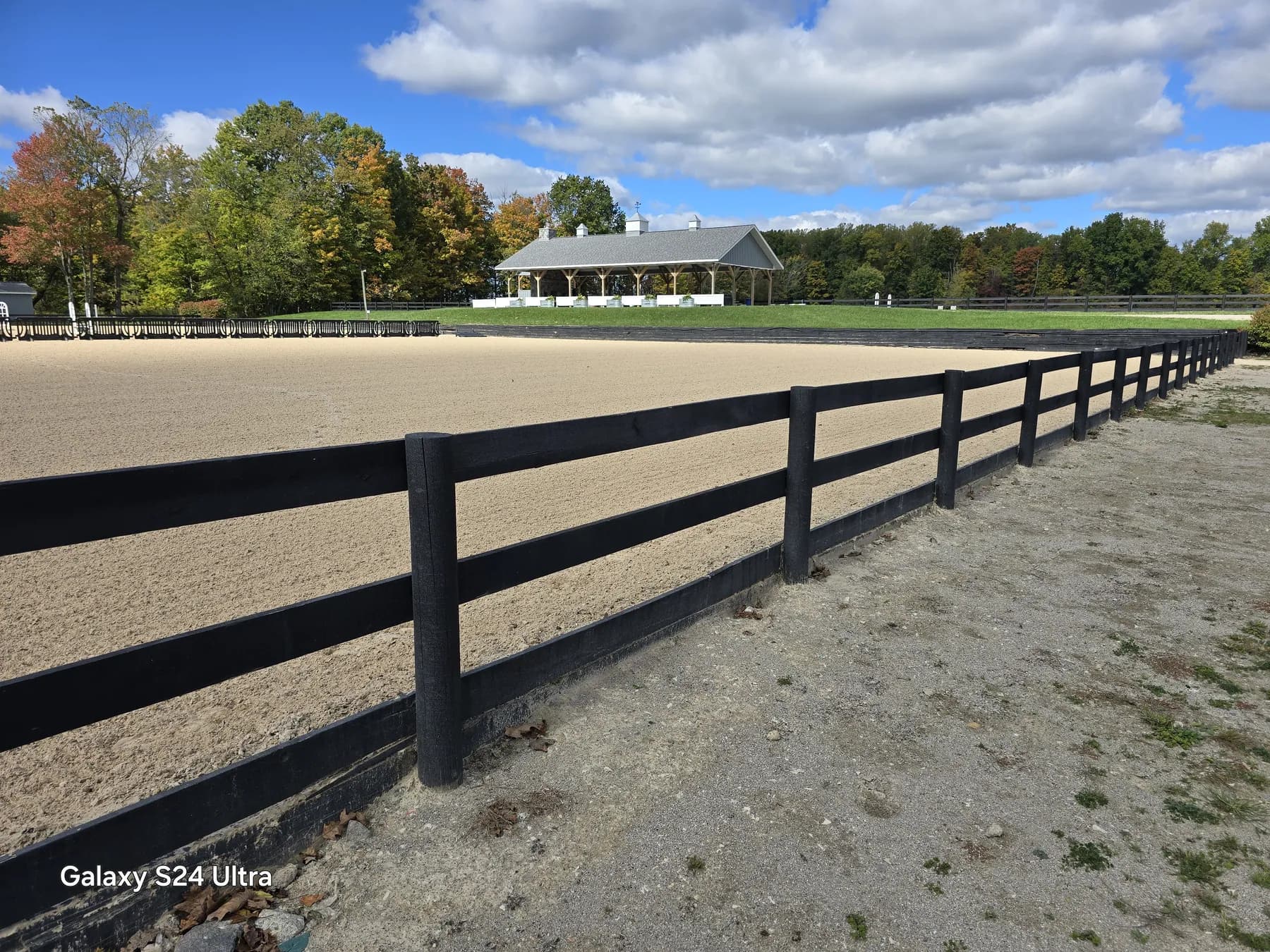
Farm Fence Painting & Staining
Painting, staining and recoating for board fence, post-and-rail, paddock and perimeter fencing on Marion County horse farms and acreage properties.
Learn more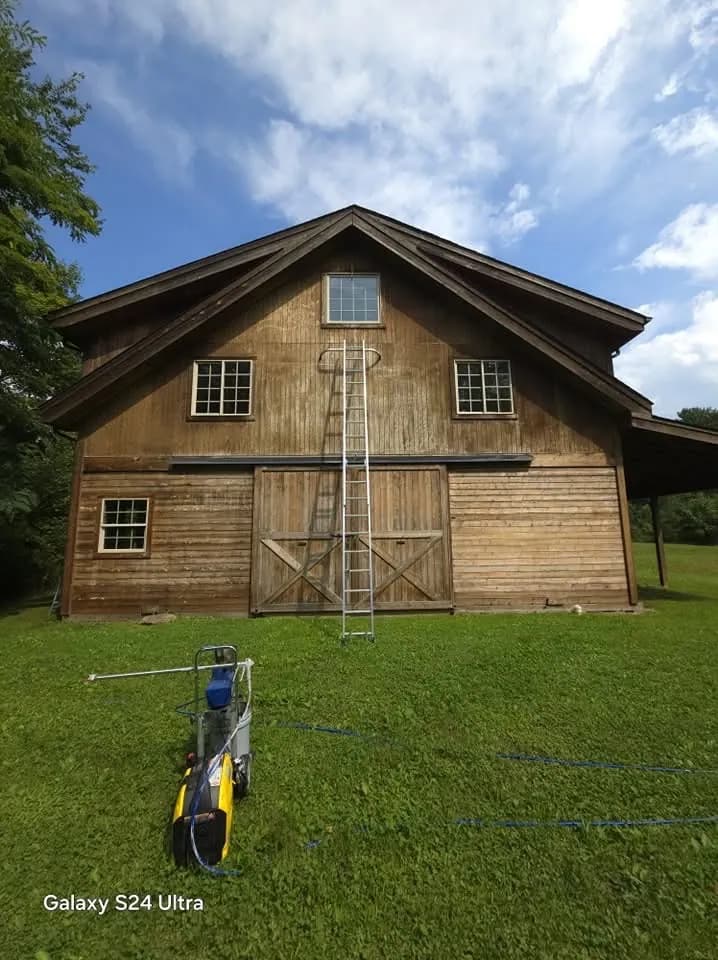
Pressure Washing & Soft Washing
Exterior cleaning for houses, roofs, driveways, pool decks, barns, fences and farm structures — soft washing where pressure would cause damage.
Learn more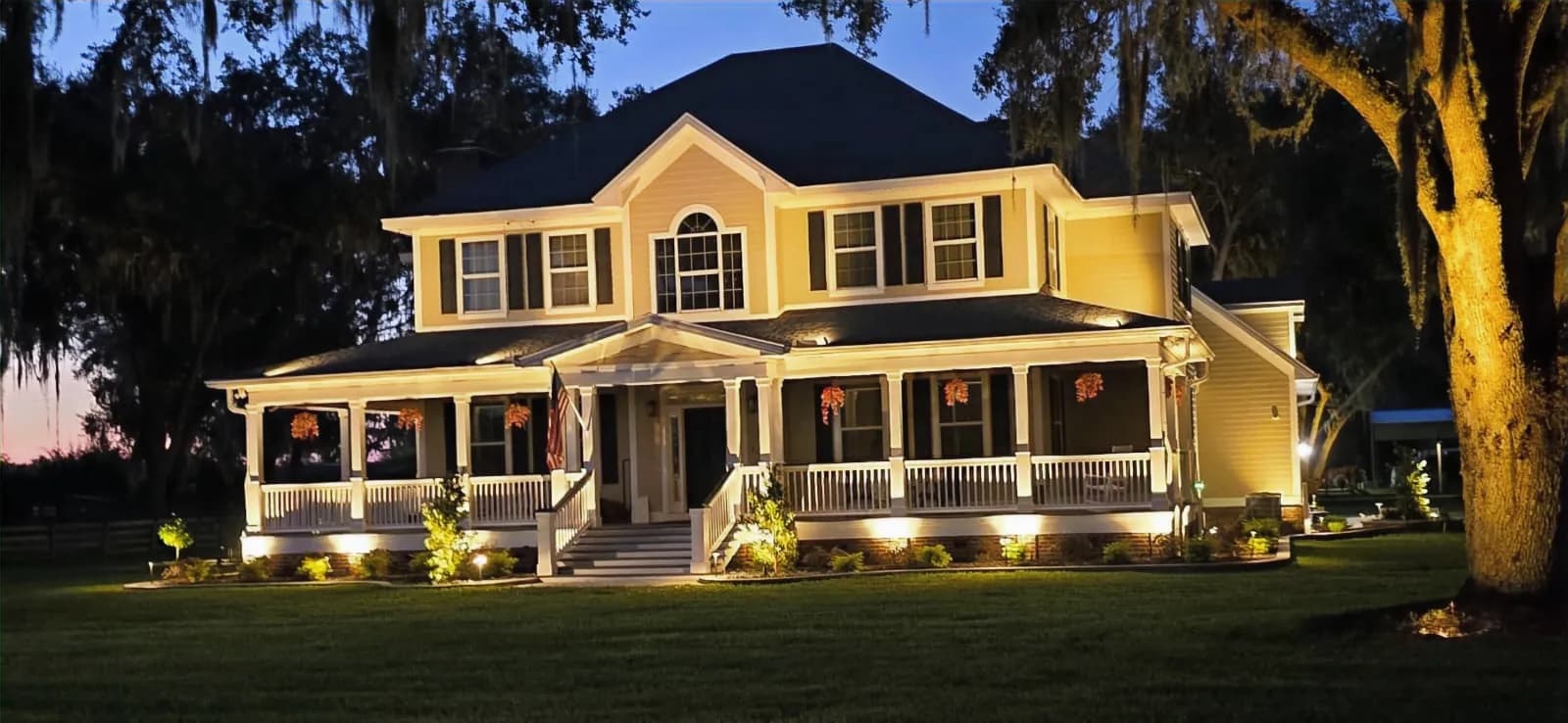
Exterior House Painting
Full exterior repaints for homes across Marion County — stucco, concrete block, fibre cement, wood siding, trim, soffit, fascia and garage doors.
Learn moreGet a quote for horse farm & barn painting
Free written estimate, no pressure, and a straight answer about what the job actually needs.
Prefer email? rjlpainting45@gmail.com